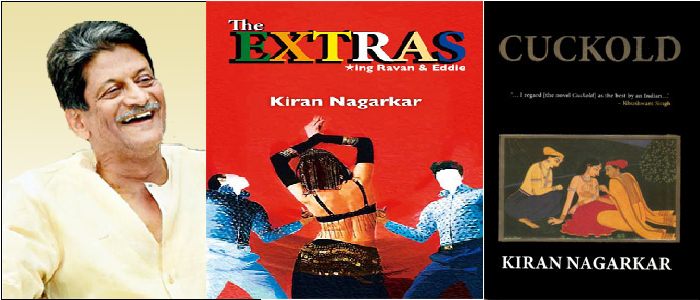
• FEATURED WRITERS:
  • DIVAKAR KAMBLI
  • AMOL REDIJ
  • P. K. DASTOOR
  • ANIKET SAWANT
  • DEVIKARANI KAMATH
  • ARUN DABHOLKAR

FEATURED ARTICLES

Just a few days before the Oscars, I watched “The Artist” Read More ...

One man I have believed who can facilely camouflage pathos Read More ...

He’s an octogenarian! You won’t believe. Read More ...

Lately, Robot has been in news for shrieking Ra. One. Read More ...

What a black humour! To call stylish walker, a langda. Pawan Malhotra as Salim... Read More ...

As not vitiated by a speck of ‘herdship mentality' that Mumbaikars borne... Read More ...

I do not understand whether to cry or enjoy since the day Sachin Tendulkar. Read More ...

Showing posts with label Satyajit Ray. Show all posts

Just a few days before the Oscars, I watched “The Artist”, a movie that was much talked about. I was rather a little skeptical to watch it. However, a conversation with Bollywood enthusiast and a columnist urged me to finally book a ticket at a “not-so-good, not-so-bad” theatre in Pune. I wish I could have got to watch “The Artist” in Regal, Eros, Sterling, theatres where I have enjoyed most English classics.
I had had enough of Apes, Spider-men, Lord of Rings, all sorts of aliens attacking our planet, and many other specially-abled creatures with high visual-sound effects.
“The Artist” was a welcome change for my movie watching experience. Black-and-White and Silent, a courageous thing to do in the times of 3D-VFX etc. A wonderfully crafted movie at the able hands of writer-director Michel Hazanavicius, and effortlessly portrayed on screen by Jean Dujardin and Berenice Bejo. The movie is an exciting ride with classical imagery and impressive-inventive filmmaking techniques. It is packed with apt adroitness, euphonious background music, impressive acting with right coalescence of exactitude and melodramatic hyperbole.
In its most entireties, “The Artist” is a work of perfection that B/W hue can be experimented with. I watched the movie once again yesterday. This time, I was transported to the golden era of our black & white movies, when our industry was still known as Indian Cinema and not Bollywood. While I am in no power to draw parallels between “The Artist” and our times of B/W cinema, watching “The Artist” for the second time echoed “Pyaasa” and “Kagaz Ke Phool” all the while; the themes differ though, While Michel's creation has a comical-happy ending base, Guru Dutt movies were dark with tragic ending, but both the creations are equally iconic.
When I talk to some people I know about Guru Dutt movies, ridges of cynicism get etched on their forehead. They consider Dutt’s movies to be slow, melodramatic, and archaic much similar to the reputation that silent movies have. I have seen only few silent movies (including our very own "Raja Harishchandra") and found them to be lissome and amusing contrary to the belief about silent movies. Silent movies focused more on acting skills as evidently referenced in Sunset Boulevard, “We didn’t need dialogues, We have faces”. Filmmaking essentially is a means of communication, expressive means of narration using gestures and body language, when talkies was yet to be defined or rather technique to capture sound was to be devised. Cinema-men’s predicament could have been similar; they had ideas but no means (technically) to convey it. And then facial expressions, body movements, use of eyes was the resort to portray emotions on screen, which appealed to everyone universally, a language could still have been a barrier but emotions are same across the world – an upper curve of lips meant smile and downward meant a frown. Chaplin used this means effectively and to the optimum level, which makes him undisputed king of silent movies.
Guru Dutt has such a widespread that he could have effortlessly made silent movies had he been in those times and he could have masterminded an equally picturesque “The Artist” in today’s times.
This 84th Academy Award winning film shot in black-and-white, is a pleasing experimentation of lights and shadows, of which our own Guru Dutt has been a master. Guru Dutt, a perfectionist with extraordinary vision. Like “The Artist” where language is no barrier to understand, Dutt’s movies too appealed universally and are a subject of research studies till date. I have watched “Pyaasa” over 50 times and each time I have found something new in it. For e.g. when I watched “Pyaasa” recently, I noticed when Dutt stands at the doorway with a halo-like effect behind him, and his hands stretched holding the door frame, it almost resembles like Jesus on the cross; wherein to my understanding, it was like Vijay (the poet in “Pyaasa”) had been crucified by the immoral & selfish attitude of the society, and possibly enlightening the people that what you seek is not the ultimate thing at all through his ‘yeh duniya agar mil bhi jaye toh kya hai’.
Like in “The Artist”, the reel hero (Valentin) and the real hero (director Michel Hazanavicius), concentrate on the form of art than the glamour, Guru Dutt too focused on the artistry and not on the success that is made of few awards or bunch of flowers, may be just like the “Kagaz Ke Phool”. Michel could have easily used the latest technology and effects to make a movie. But perhaps he wasn’t just making a movie, he was trying to make a difference. Much like what Guru Dutt tried to do at that time, when in the post-independence era Satyajit Raj was epitomizing poverty, Raj Kapoor was giving life to street characters of Mumbai, Bimal Roy was marching ahead with social issues, Mehboob Khan was glorifying romance-melodrama. And there was this Guru Dutt trying to differ by portraying a different point-of-view, nihilistic story telling. Dutt focused mostly on the hypocrisy of the society, the pseudo-morals they followed, and the exploitation of the underprivileged.
The poise of “The Artist” lies in the fact that though watching a silent, black-and-white movie, you are in no way conditioned to think that it is an old-fashioned ancient movie. Dutt’s movies had a similar virtuosity that effortlessly bestrode the demarcation between socio-contextual cinema and a form of prevalent movie without burdening the audience.
Dutt was gifted with great musical sense and he was a trained dancer too, which made his movies musically pleasing and aesthetic. He understood the depth of acting which made him a successful director who could make his actors emote naturally. Guru Dutt, a master of camera tactics, along with V. K. Murthy (the best cinematographer Indian Cinema has ever had), captured the best frames, they knew well when to take a long shot and when to capture the glitter in the eye (see Waheeda Rehman in Jaane Kya Tuney Kahi in “Pyaasa”).
“The Artist” a great collaborative effort by Michel Hazanavicius (writer-director), Jean Dujardin and Bérénice Bejo (main leads), Ludovic Bource (music), Guillaume Schiffman (cinematographer), went on to sweep the Academy Awards. Well, a kind of magic that Guru Dutt, V K Murthy, Waheeda Rehman, Abrar Alvi, S D Burman, Sahir Ludhiyanvi created 50 years ago and they could have surely done that today as well with striking screenplay, particularized cinematography, and mellifluous dialogues.
His movies went to become cult classics, with “Pyaasa” and “Kagaz Ke Phool” enjoying the status of finest films ever made with a mention in the prestigious Time. Unfortunately, Guru Dutt could not live so long to see his days of glory, and witness the resonating impact his movies have on hearts & minds of many across the world, they have cult following in Germany, and France, from where comes “The Artist”.
- Redam

Anna Hazare is on fast at Jantar Mantar road. He is 73. Somewhere nearby Rahul Gandhi is behind a steel curtain. He is 37. He has an intention of gathering unequivocal support of youth. He came to Maharashtra for that. Befriended a few local youth labeled with parental fame and fortune, but unknown to Maharashtra. The faces don’t have state wide recognition. He went to Bihar on his mission with all the central support. He fell flat on his nose.
His shrewd, intentional brigade vociferates, he is a youth icon!
All this is going on as a prelude to promote him as a future Prime Minister.
The 73 year old Anna Hazare with the help of hardly three persons gathers an all India youth support. This definitely would dishearten Rahul Gandhi and his publicity strategists. The brigade maligning Anna Hazare is let loose. He doesn’t have courage or courtesy to go and meet AH openly.
What kind of leadership game is this?
Say, perchance RG meets AH. What a magic it will make, he can’t infer, nor his advisers, invisible behind curtain.
I bet half of the open supporters, pan India, of Anna Hazare would empathize with RG. In fact, the reverse. He should empathize with the youth in millions.
The publicity men behind curtain are repeating the game plan played at the time of his father Rajiv Gandhi’s promotion to the post.
In the process they are forgetting that they have gotten old though continually harping about youth.
There is not a sage visible among or around.
By making a chief minister wait for two hours under a tree and spend half of his own day wasting in camouflaging ShivSena, if he feels he has climbed a few steps of leadership ladder then he is living in his imaginary world.
There is a possibility that if the onslaught of the movement against corruption continues, the impending elections in the four states would make a penchant for failure in him, maybe, as he doesn’t express himself well.
Shouldn’t the would-be leader of the nation express himself openly at the time of crisis instead of hiding in a cave?
It is a lesson from a veteran of Ralegan Siddhi that half a million villages far from Janpath could be influenced by a simple and honest act. The attitude of shunning every thing even, hollow talks without substance or waving hands to cricket fans sitting among a select bunch of aam aadmi doesn’t. At least expressions exhibiting understanding cricket could have worked. Feigning in the cricket field or stadium is no easy game to play especially before cricket crazy billion Indians, future leaders have to note.
In Shataranj Ke Khiladi of Satyajit Ray, one of the Chess players, Mirza says to Mir at the end, we would play at home after nightfall. We need darkness to hide our faces.
The daytime sham Chess, deliberately prolonged, will go on though, pertaining to their old habit, forgetting the moves are being done in front of fasting Anna Hazare, as if to lose their king.

- DevikaRani Kamath

Having completed a day long hectic training, I made myself comfortable at the lounge of the hotel where I was accommodated. The lounge was aptly called “Unlock”.

A group of five young (younger than me) men occupied a table next to me. They were engaged in a conversation about movies, beers, girls, and politics, of course. No matter who they are and what we do, politics forms an inevitable part of our daily lives and discussions. You cannot ignore our politicians; you can simply hate them. With so much of dirt sprouting out from the numerous scams in the country the wrath is unavoidable.

Soon their discussion turned serious. Reality started to speak after few mugs of beer bloated their stomach. They expressed their anger, forms of punishment they would want to implement for the scamsters, the change they needed (Obamania perhaps), and that they would need to be a part of the system suddenly came like a revelation to them. Deep into their sub-conscious minds they might have remembered the appeals by the age old and young promotee politicians.

However, what I liked about the group was that they still remained intact to their topic of discussion, and now they were talking sense after they took several trips to the bathroom to empty. They had turned their attention to implement something that little easier than joining politics, possibly less expensive, and yet had a larger reach. “We will make movies, documentaries on political satire,” said one. The group seemed to be a movie enthusiast. So was I. And with their due permission, I joined them.

We discussed at length about the movies based on politics. Not many belonged to satirical genre. Most of them were serious – Hu Tu Tu, Gulaal, Rajneeti, Satta, Bombay, Aandhi, et al. None of them had a comical touchup. Nothing like “Jaane Bhi Do Yaaron” was ever made again. Serious movies often get restored on the superficial level of the memory while films like Jaane Bhi… go deep down into our memory – and that is one way to keep the political wrath kindled in us. Movies like Satta and Rajneeti tend to scare people making it look like an impossible preposition for people to enter politics.

While the whole day training may not have been that fruitful the evening session had lot many lessons to teach.

Back in my room, while browsing through the TV channels flooded with news about scams, I felt the strong urge to do something on political satire based movies. But are the satires seriously taken? A suspicion started piercining my brain. For a moment, I thought I should have been from Kerala or Bengal. Movies away from Bollywood and Tollywood are full of masala & make ups, Movies made in Kerala and Bengal have substance. It is because of the high literacy rate keeping ethnicity in tact, I presume.

Awareness about the social issues exhibited throught their life had made the likes of T. S. Pillai, M.T. Vasudevan Nair, V. M. Basheer and many others all the time great writers and periodical like Malayalam Manorama that has been the highest circulating periodical in regional space.

This literature gave us the director like Adoor Gopalkrishnan. He made serious movies based on serious literature.

His two movies out of eleven, I can quote in this space. Swayamwaram (1972) a debut movie written and directed by him based on middle class angst and transition of middle class of Kerala into a modernist society. It was an attempt to come to terms with the disillusionment in ideologies.

Mathillukal (1988) based on a novel by V.M. Basheer depicting an unsuccessful love story due to parting by a jail wall. When freed from jail Basheer asks, 'who needs freedom? Outside is an even bigger jail.'

And as the young boys were talking about the documentaries let me tell you that AG has made more than twenty documentaries and two short fiction films.

And Bengal has the legacy of Satyajit Ray.

Movies manufactured in Mumbai are more about dreams while those from Kerala factory are about reality. Adoor Gopalkrishnan followed the tradition of Ray to base his movies based on classical literature with social motifs. Of all the movies made in India, Malayalam movies have highlighted politics the most in terms of making issue based movies. Tamil and Hindi movies take politics as a subject only to showcase the hero’s valour of one-man-army fighting the system.

When sinking into the bed with drowsy eyes, I had a sense of hope squirting around my lips in form a smile. There is someone, and a younger generation, which is thinking about fighting the political mess in the country, to take the politicians to task, and bring shame to them. There is a wave of change that slowly erupting under the sea wherein everyone is frustrated with the chaos that politicians and power brokers of this country have created.

Not everyone needs to go the Gandhiji and Bhagat Singh to bring about a change. Few can take up what Tilak tried – gathering people through art and culture.

Hopefully that was what that young lot was trying to do.

- Amol Redij