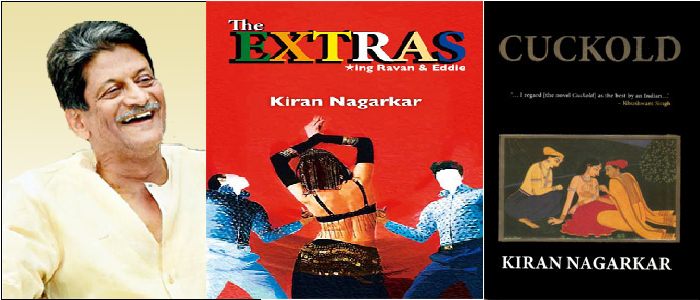
• FEATURED WRITERS:
  • DIVAKAR KAMBLI
  • AMOL REDIJ
  • P. K. DASTOOR
  • ANIKET SAWANT
  • DEVIKARANI KAMATH
  • ARUN DABHOLKAR

FEATURED ARTICLES

Just a few days before the Oscars, I watched “The Artist” Read More ...

One man I have believed who can facilely camouflage pathos Read More ...

He’s an octogenarian! You won’t believe. Read More ...

Lately, Robot has been in news for shrieking Ra. One. Read More ...

What a black humour! To call stylish walker, a langda. Pawan Malhotra as Salim... Read More ...

As not vitiated by a speck of ‘herdship mentality' that Mumbaikars borne... Read More ...

I do not understand whether to cry or enjoy since the day Sachin Tendulkar. Read More ...

Showing posts with label Health. Show all posts

I was waiting for my cab. I was standing under a tree shade next to a small shop which was at the entry of a lane that led to my residential complex. It was a scorching afternoon with passing by vehicles puffing out black smoke. I dwell in a area that still has a tinge of rural setting. Old men manoeuvring their cattle across the road is a usual sight. Schools children were flocking across the roads, some with their mothers, some with their maids, and few with their school gangs. I was rejoicing this landscape.

A collision between a truck and a four wheeler interrupted my wallow. The drivers got into a brawl. Soon, people from neighbourhood joined the chaos. Later the truck driver fled and things were coming to a stand still when a gang of school children surrounded the truck, started the typical “maa-bhen” abuse and pelted stones at the truck, few of them even tried to run in search of the truck driver with stones in their hand. I was left awestruck.

Moments later my cab arrived and I was on my way to a venue where I had to deliver a speech on “Stress Management & Relaxation Techniques”.

All through the way, the act of those school children reflected upon me, the collision episode was slowly diminishing from my memory. I was still surprised at the way those children, still in their nascent age, reacted to the incident. They probably had no clue about what went wrong, whose mistake it was, or what the entire situation was about.

From where did this temperament of violence and abuse creep in? Weren’t they at an age to run bare feet into the sprawling fields or play cricket or do things that children of that age did?

My further pondering made a swarm of thoughts swirl in my mind. Foremost, the patience level has gone down generically across the entire generation, including the parents. With the kind of separations taking place increasingly it is inevitable that tolerance level of young couples has gone down. With the parents not able to manage their time and stress effectively, the frustration is passed on to the children. And in few cases children witness their parent’s agitation which gets engraved on their innocent minds, which is later practiced in the world outside, seldom noticed by their parents.

Other factor could possibly be technology; with arcade games gaining so much popularity, children today have forgotten playing strategy board games or outdoor games. These games actually help in channelizing mental thoughts and building up endurance which effectively aid individual’s physiological, physical, and psychological well-being/development. The computer games nowadays where killings, robberies, bomb blasts are primary themes teach children similar motives and have an adverse effect on children’s minds, and this is practised in the outer world again. Their minds become to prone to violent behaviour and their mindset takes a shape of thought – “eradication is the only solution”. In some parts of the country, access to weapons is easy, thus facilitating irrational killings or bloodshed where satisfaction of the ego is the only objective and impatience (inability to rationalise) the root cause.
Children are so much soaked in violence that it won’t be surprising to hear them talk about it or go ahead and do it.

It is the time to ask “WHY” such kind of behaviour has become so ubiquitous in our society and there is a strong need to devise techniques to alienate violence among children. While stringent rules and law regulations will not be the only solution to this problem, I am sure you will second me about the requisite veracity that mental well-being is a crucial facet of children’s young years.

   
Psychologists all over who have been practicing in schools and counselling about children’s mental health have stressed that it is just not necessary to impart academic and learning skills but it is also important to teach them thinking ability, coping up and communicating skills, and also few methods on behavioural aspects.

Every school, ideally, should have psychologists or behavioural therapists on their panels so counsel the children on timely basis and interface with the parents regularly to teach and seek feedback about mental wellness techniques.

Mental health services and counselling practices must be implemented in schools and our children rightly deserve it. Resources are available in plenty, they need to be tapped and there needs to be a change in our mentality too – “every individual referred to a psychologist does not necessarily equate to one being mad”. There needs to be strong measures for involvement and prevention at the earliest.

P.S. - Unfortunately, psychologists are projected as helpers, who are brought in only after the crisis has taken place, which regrettably is demeaning and certainly fruitless.

- Pragyan Jha
(Pragyan Jha is a qualified psychologist & practicing counsellor in Pune)

An individual’s stress is a response to a threatening or challenging environmental condition. To understand and explore more about the stress, it is important to know about the association of stress and fear. Both are correlated to each other. But in many cases we are responsible for our stress. We encounter both positive and negative stressors; circumstances from where the stress is originated.

Stress though largely associated with psychological patterns, impacts one’s well being physically and affects the physiological system. In long run it dampens physical alertness and makes our body a hatchery for various physical ailments such as high blood pressure, metabolic disorders (like diabetes, indigestion & impotency) and increased incidences of cold and flu. Prolonged stress can be observed in post traumatic stress disorders, major depression and in some cases aging, lack of appetite, severe hair loss etc. However, the significant brunt is on the mental health. It kills your zeal, the ability to do things you enjoy, and it creates a deep fissure in your positive thinking pattern which can really be hazardous, eventually leading to state of loneliness, addiction, violent behaviour etc seeping inside you like a slow poison.

   
There is good news though. There are ways to tackle stress. As is rightly said, “a stitch in time saves nine”, stress too can be handled effectively when curative actions are taken adequately and appropriately.

Our response to stress depends on many factors like genetic inheritance, family & childhood experiences, overall physical & mental health and our perception of stress. It has been medically proved that our thoughts and emotions influence our health – body is the state of mind. This is so because there is a strong physical link between brain and the immune system.

I wish to emphasize again that stress does not originate from air or water or plants or anything around us. Stress is seated within us and it entirely depends on us when and how much of it to liberate. So as stress originates from within us, we should make an attempt from within to eliminate it. And this is simple. Controlled behaviour and attitude can do the miracle. Our mind is the mirror of the self, and responds in the manner we think. An individual’s well being plays a crucial role in successful adjustment. Positive attitude and behavior are vital for mind and body. So it’s well said, heaven and hell reside in the person’s mind; it depends entirely on that person which side he/she wants to fall and lead a life.

However, let me also leave you with a perspective that stress is always not harmful. Anything in controlled manner and moderation is good, we all have been taught of this since our childhood and possibly many of us have practiced and experienced it too. Short term stress has its benefits. Little anxiety and work pressure enhances the performance of an individual. It has a positive impact as it leads to more dedicated effort from an individual who strives for higher achievement levels. Also, sometimes acute stress is good for gearing up body’s immune system.

Use “Stress” in another standpoint. Change the meaning of “stress” in your life to “being assertive”. Stress on the importance of living not just existing, stress on achieving success & excellence, stress on leading a life full of happiness & contentment.
Have a good life! It’s fun!

- Pragyan Jha
(Pragyan Jha is a qualified psychologist & practicing counsellor in Pune)

The rural India is usually looked down upon. People mostly have tanned skin. The infrastructure doesn’t quench our malls-multiplexes-mobiles hankering. The water is examined with suspicion (it is a misnomer though). It is very rare that we, the urban crowd, might shortlist a rural area as a picnic spot, unless that area has good hotels, bars, mineral water outlets, swimming pools, and so on, even though that rural setup is full of exquisite landscapes, refreshing nature, sumptuous greenery, and compassionate people.

However, these areas, which we ignorantly brush under our carpets for they fail to offer us the comforts we desire, are stuffed with copious natural resources and forestation that can satisfy our daily basic needs.

I remember my grandfather narrating a tale to me about a family in our native place that treated the villagers with leaves of various plants and trees. The wisdom had trickled down from generation to generation. This particular family had a peculiar research methodology. And the results never failed. Almost every ailment, disease, illness was perfectly cured with the paste of leaves they offered. There were different leaves to heal different disorders. Curiosity prevailed in the village for this proficiency of theirs until one day it was revealed to a close confidant who happened to be my grandfather.

“It is simple,” said the well researched and proven doctor “our families have been observing the monkeys for long. Most of the times diseases of human beings and apes are similar. Under certain circumstances, monkeys ate the leaves of particular plants or trees. This pattern was studied for long. And thus based on hard gathered observations and sampling analysis, leaves having particular medicinal values were selected for treatment”

Indeed a genius thing that would mock at the medical science research going on in closed hi-tech ultra-modern costly research centres. Imagine the number of cute white rats that could have been spared.

One such worthiness of rural India that I recently came across is the medications that people (tribes) from these bucolic areas practice. No chemicals involved, just pure natural elements derived from plants and food products. It is indeed a wonder that these illiterate people have the innate quality of recognising the exact plant rich in medicinal value. Very apt; quite adept.

One of my friends practicing medicine as an intern in Buldhana district had told me interesting tales about the medicines people used there.

The tribal population, poor and backward socially & economically, had the abundant wealth of knowledge about the medicinal properties of the natural vegetation around and items of daily household use like coconut oil, milk, turmeric powder, jaggery, and so on. The tribes possess the inimitable erudition to heal around thirty one different human related diseases. This knowledge is the prized property of the population here and the elderly respect it to the utmost. The astuteness of medicinal plant species of these people might in future help large research organisations to develop new drugs for the welfare of the mankind. That of course if the flora and fauna are preserved in the right spirits.

Ever since the mankind has evolved, plants have been used for their medicinal values. It is a matter of pride then that these illiterate people have preserved that culture without any selfishness or asking for monetary recognition in return.

Consider for example, root extract of a plant ranbhendi mixed with curd is used to cure piles. Kidney stone can be cured in 10-15 days when treated with decoction of gokharu seeds and zingiber officinale rhizome. Powder of dried aghada plant added with honey can cure asthma in a week. Homogenised mixture of durwa, haral with honey when taken daily for a fortnight helps in maintaining youthfulness. Paste of amba kernels and fruit wall of Emblica officinalis Gaertn when applied to hair prevents baldness and enriches hair growth. Root powder of ashwagandha, askand with cow milk is used to heal nocturnal emission and strengthen the body. Leaves of chincha cooked with anthill soil are used to treat fractures. Intestinal worms can be cured by taking sitaphal seed powder with jaggery before meals for a week.

You will find numerous such examples if you go to explore wonders for tribal land. People from the tribal land have had continuous relationship with the vegetations, and thus have gained profound intelligence about the plants and their medicinal traits and that too at no cost. The tribes and people of the rural India have tremendous faith in their knowledge, their findings, and their timely proven medicines.

Today we are busy eroding the vegetations, devastating villages for our greed of constructing real estate marvels. The loss of biomass, organic productivity, insolvency of soil, mudding of water bodies are making things worrisome. We are busy acculturating and modernizing that will surely deprive us of the traditional information that the primitive indigenous societies have stored and nurtured for generations.
Nutritional supplements and herbal medicines have today become a craze of this generation. It appears and becomes nutritional or beneficial or enriched with medicinal values when it arrives from the foreign land packaged with “Made in USA” marks – is the psychology that we have developed, which unfortunately will only ruin our values, culture, and rich knowledge base.

India lives in villages. There reside the true Indians. You and I of today who munch a McD burger and sip a Coke are pseudos.

Next time when you take the bite of burger and find it as a pleasuring experience, imagine what contentment it will be bit a cashew fruit just plucked from the tree or sip coconut water from the coconut that just fell in front of your feet from the tall tree.

There is after all, a refreshing difference between the natural and the artificial.

- Amol Redij

Today, hi-tech innovations and scientific revolution have gripped all around us. It has become nearly impossible to imagine a thing without them. Though these innovations have made life simpler mechanically, it has deeply hampered human’s natural behaviour. The psyche to get things (results) immediately has reduced the patience levels of an individual thereby distorting the entire pattern of our society. The structure of our thinking and the building blocks of our society are changing rapidly thus creating a social and mental imbalance. Day to day examples of these can be observed in increased stress levels of employed individuals, rising amounts of divorces, adjusting with the family, fights on petty issues, unnecessary violent reactions, and so on.

Before the picture gets more worrisome, it is the time to heal the society and its habitants. Counselling has become the need of the hour, among one of the basic necessities of life apart from roti, kapda, makaan. Counselling is required for better adaptation of an individual.

Counselling comprises professional experts giving personal help to the distressed mind. More often people get wary of a counsellor, as psychologist habitually equated to someone to cures madness. People fear being called mad or someone taking medical help for mental illness. However, counselling is not about all that. It is in fact to help an individual concentrate on his/her well being.

Counselling is designed to assist a person in accomplishing the purpose of achieving a stable mind that helps induce rational thought process. It does not answer the dilemma of an individual, but facilitates the individual to resolve the problem on his/her own.

It is myth that counselling is about treating mad people or imbalanced minds. On the contrary, counselling focuses on guiding the person by understanding his psyche than focussing on the problem and treating it.

This distinct profession has its interdisciplinary base, interlinked with other fields such as sociology, history, anthropology, psychometric, psychology, ethics, and hence it is a wonderful culmination of theories (& practices) that promote the growth of an individual by self- direction.

Guidance counsellor, an expert who practices counselling, supports an individual by systematic professional process through education and interpretive procedure. This is meant to enable the individual to gain better understanding of his own characteristics and potentialities. Further, in accordance with social & moral values, this helps him to relate himself more satisfactorily to social requirement and opportunities.

With increasing pressures to achieve higher things in life, people have forgotten the basic value of enjoying life. Rather than detaching oneself from the material pleasures, people are today coming loose from nature and simple pleasures in life. It is here that counselling helps you create a balance. It does not set a vision for you, it does not give you direction in life but certainly helps you improve your patience levels and shred the ignorance that has innately leached inside you.

- Pragyan Jha
(Pragyan Jha is a qualified psychologist & practicing counsellor in Pune)

I’m not a health conscious person and as such not a calorie or weight conscious. Having been able to maintain constant weight proportional to my height, I don’t have any ailments either. It happens naturally in my case. I don’t make any efforts for that. I have a sweet tooth and eat as much sweet as I feel like, without a trace of fear for diabetes. I don’t do any exercise but to walk in the evenings. I can’t get up before sunrise though I’m no more a nocturnal creature now. I read till late nights instead. There is no restriction of any kind on my eating habits. I can easily gulp couple of vada-paavs or deep fried samosas without any fear. Only thing is that I’m strictly choosy about the friers, the calorie sellers and their selection of oil pulls.

In short, I can be labelled as more of a careless fellow than carefree due to the façade of my behaviour. For all this, I am grateful to my genes. There isn’t a single case of obesity in any of our generations of the past.

Even so I thank the University of California, Davis and the National Center for Food Safety and Technology, Illinois Institute of Technology for their research that people can include potatoes in their diet and still lose weight. This research was presented at the Obesity Society’s 28th Annual Scientific Meeting held during October 8-12, 2010.

The lead researcher Dr. Britt Burton-Freeman, PhD, MS. said, ‘There is no evidence that potatoes, when prepared in a healthful manner, contribute to weight gain. In fact, we are seeing that they can be part of a weight loss program.’ Forget about the research process and the high glycemic index. You’d read it soon when it starts appearing in the newspapers.

Covered on three sides by creek and fourth by sea shore, our childhood was blessed with wholesome diet of fresh fish and red rice that infused in us rich quantities of proteins. It suffices till date, I presume. Mumbai made me vegetarian due to its stinking fish. I feel the stink because I’ve eaten fish lifted straight from a creek or sea unlike the stored frozen sea food eaters of Mumbai. My mother and her brother never ate fish in Mumbai even when it was Bombay and though Bombay duck was famous and not available in our coastal village on the Goa-Maharashtra boundary. I pity the boaster fish eaters, especially in Mumbai. The sea water is polluted everywhere far beyond Mumbai shores and fish get injected with the stink.

It can be deciphered like this – Those who haven’t seen “Lawrence of Arabia” and “The Secret of Santa Vittoria” carefully, will always think Sholay to be a great movie. Or those who have not seen Al Pacino in “Scarface” will always fancy that Amitabh Bachchan as Vijay Dinanath Chauhan in “Agneepath” is great. Such illusions have developed over years and now have taken a form of truth.

Quite similarly, it’s never possible for those who have rejoiced on ice-stored dead stuff to know the real savour of the fresh water fish.

Now what other than a potato can a vegetarian can eat? In any form – boiled, cooked or fried. I am a have been a potato bhakta since ages.

In Irani hotels I’ve eaten dishfuls of potato finger chips with ‘as-much-as-you want’ tomato sauce in college days, with a pani-kum chai after that.

In Kulkarni’s hotel, in Girgaon, I’ve gulped down plates of potato bhaji served without anything; just plain simple bhaji. It’s generally eaten with chapatti or puri. But not so with the Kulkarni’s. He served batata bhaji as a special dish like bhajji plate or batata vada, unwaveringly. Those who ridiculed him before tasting his obstinate dish gulped their words along with the batata bhaji silently. With second dish they started loving Girgaon’s Kulkarni.

The hotel closed down succumbing to the invasion of fusion in eating habits. Purity and defiance necessarily are destroyed. That happened with Kulkarni’s restaurant too.

At home every vegetable and most of the curries had potato. For example, vangi-potato, tomato-potato vegetable and curry, cooked in red chilly masala. The leafy vegetables like methi also preferred getting boiled with potato at home. In Alleppy, I ate more pieces of potato than chicken in a dish way back when I was not a vegetarian.

And who’d forget the most loved and popular Sunday morning Maharashtrian special dish. Batata-poha. I’ve been cherishing it since I was a toddler. Miss a Sunday and I’m uneasy like an addict not getting his intoxicating dose at a certain time. But crown on this all, is my home made batatyachi kaape. It is somewhat similar to potato finger chips, except that kaape are small round slices instead of long chops, and of course tastier being fully wrapped with red chilly masala powder. I can eat one hundred slices fried like this easily at a go without anything else with, I bet, any time.

Cut the washed raw potatoes without peeling and cut them horizontally into two millimeter slices. Apply rawa (grinded rice powder) mixed with red chilly masala powder with a small sprinkle of salt. Fry both sides like a fish on tawa in a suitable dose of oil you like.

Here, we prefer ground nut oil. In south they prefer coconut oil that keeps the hair black till they get the mark of senior citizenship, mostly.

Varan (preferably) or any curry, rice and these slices is a staple diet for both, bachelors as well as spinsters; lunch or dinner perennially, I vouch. Ask the IT girls working in Bangaluru.


To add to all this there is good news from Moses Lake, Washington. The executive director of the Washington Potato Commission says he is halfway through the fourth week of his potato-only diet with five weeks left to go. Chris Voigt said he vowed to eat nothing but potatoes for 60 days to bolster the reputation of the starchy staple, which he said often gets unfairly labeled as unhealthy, the Tri-City Herald in Kennewick, Wash., reported. Voigt said he has eaten his potatoes in all imaginable forms, including boiled, baked, fried, grilled and even a potato ice cream made by his wife. The Moses Lake man's quest has received multiple endorsements, including one from Gov. Christine Gregoire. ‘You'll prove you can eat potatoes without looking like one,’ the governor joked to Voigt. This will gladden even the couch potato eating lots of potatoes!

As for as I am concerned I’ve never looked so and ever looked lanky, I boast here, to the unseen governor there or here.

- Divakar Kambli